
The Man Who Wasn't There
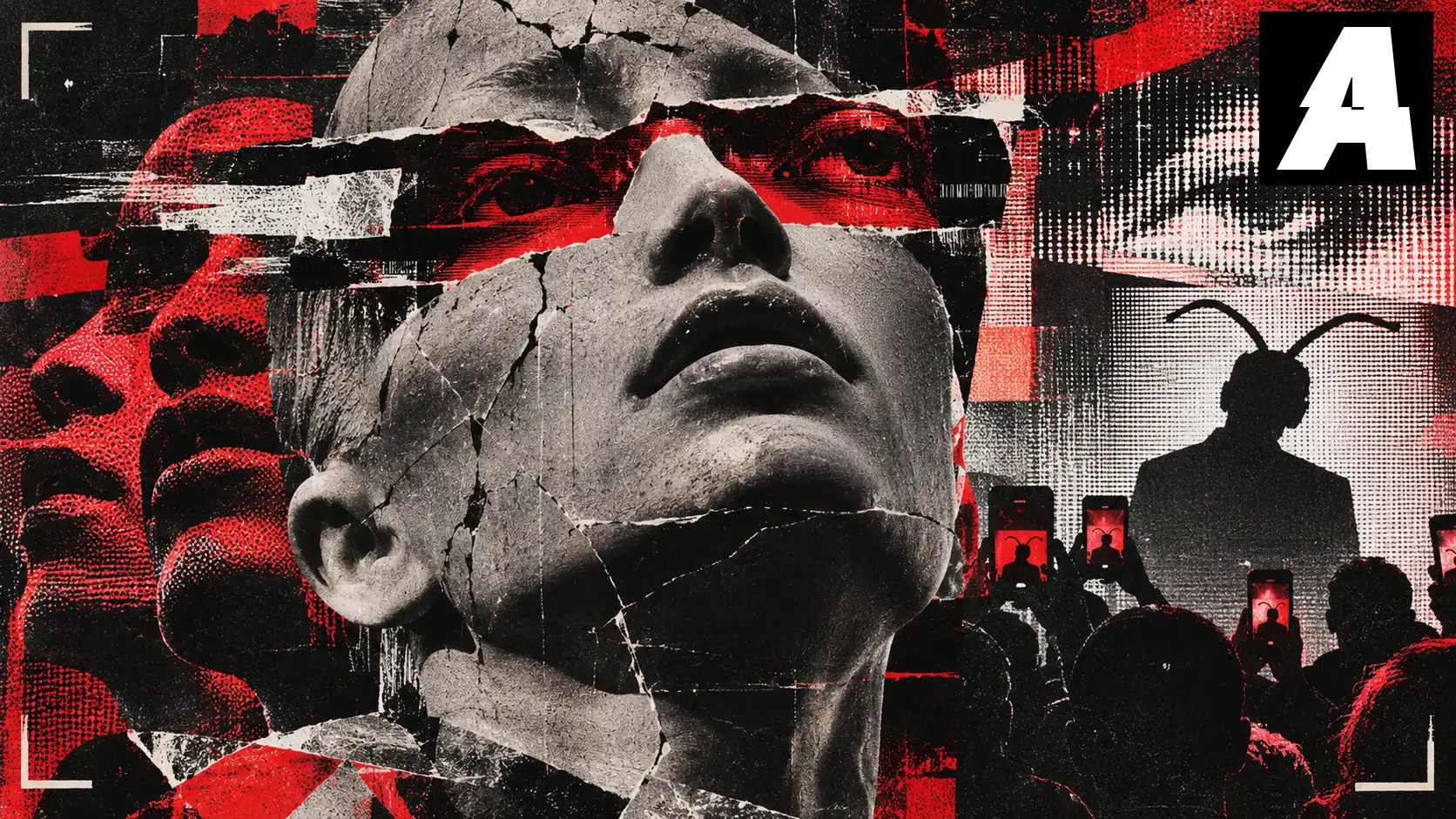
The Man Who Wasn't There
By Mira Solis | Tue, Nov 17, 2026
In the summer of 2025, an indie-psych outfit called The Velvet Sundown racked up over a million streams on Spotify before anyone noticed that none of its four members existed. The band’s origin story—complete with dusty seventies nostalgia, warm analog guitars, and promotional photographs rendered by generative models—was a fabrication. Yet the strangest part of the episode was not the synthetic audio. It was the man who stepped forward to claim responsibility for it.
His name was Andrew Frelon. He gave quotes to Rolling Stone, sparred with skeptics on X, published detailed Medium confessions explaining how he engineered the project for under forty dollars as a “commissioned test” for a shadowy tech client, and later returned in October to claim he had also created Bleeding Verse, an AI post-hardcore act modeled on the Welsh band Holding Absence, in fifteen minutes on Suno. Music outlets including Exclaim! and ScreenRant ran the story as straight news. Soon, automated search summaries were citing those articles to state, as settled fact, that Andrew Frelon was the mastermind behind both bands.
There was only one problem: Andrew Frelon did not exist either.
Behind the pseudonym was Tim Boucher, a Quebec-based web safety researcher and former content moderator who had never produced a note of The Velvet Sundown’s music. He had simply noticed an unguarded vacuum—a viral AI band with no public spokesperson—and stepped inside it, registering an X account, fielding DMs from hungry tech journalists, and watching major publications print his satirical Medium posts (explicitly tagged “Satire” and “Fiction”) without making a single verification call. A phantom spokesperson had claimed authorship over a phantom band, and the cultural machinery had swallowed both whole.
To understand why this hall of mirrors worked so effortlessly, it helps to set aside moral outrage and look at the cognitive architecture of how we consume culture now.
In 1966, Susan Sontag wrote that modern sensibility is increasingly shaped by the reproduction and simulation of experience—a condition in which the commentary surrounding an object replaces our direct sensory encounter with the object itself. When listeners pressed play on The Velvet Sundown or Bleeding Verse, they were not conducting a forensic audit of harmonic structure or vocal timbre. They were responding to a familiar aesthetic wrapper: moody band portraits, genre tags, and a narrative hook. In cognitive psychology, this is known as truth-default theory—a framework developed by researcher Timothy Levine demonstrating that human cognition is evolutionarily wired to accept incoming social information as true by default, because constantly verifying every signal requires far more metabolic energy than our brains are willing to spend.
Once a story satisfies our baseline pattern recognition—tech bro creates viral AI band in fifteen minutes—the brain stops investigating. Worse, our modern information ecosystem now automates that cognitive laziness. When Frelon posted his tongue-in-cheek confession on Medium, rushed entertainment reporters copied the claims into headlines; search-engine language models then ingested those headlines and spit them back out as authoritative citations. A joke written by a pseudonymous prankster became a self-reinforcing loop—human credulity feeding algorithmic certainty, which in turn fed further human credulity.
Joan Didion spent the late 1960s documenting moments when cultural narratives detached completely from physical reality—watching people mistake theatrical gestures for political substance, or live inside borrowed scripts until the scripts collapsed. What Boucher exposed with the Frelon persona is a distinctly twenty-first-century mutation of that dissociation. He understood, long before most music executives or critics had a vocabulary for it, that in an era of synthetic abundance, the persona is the product, and the rumor is the distribution engine. You no longer need a rehearsal room, a record label, or even actual authorship of the audio files to command cultural attention. You only need to stand in the empty doorway where an author is supposed to be and let everyone else project their anxieties onto your silhouette.
There is a quiet, uncomfortable lesson here for anyone who cares about how art is made and valued. We spend endless energy debating whether machines can generate convincing melodies or passable lyrics, while ignoring how easily our own attention is hijacked by unverified narratives. When I still painted full-time, the physical canvas acted as an unforgiving check against self-deception: either the value relationship held across the room, or it didn’t. No press release could fix a dead shadow. Today, the surrounding story has grown so loud—and our habit of skimming headlines rather than sitting with the work has become so automatic—that a phantom man can take credit for a phantom band, and millions of people will argue about his ethics without ever noticing he isn’t there.
The next time a viral story breaks about a mysterious creator, an overnight algorithmic hit, or an artist supposedly disrupting an entire medium, pause before sharing the outrage or the hype. Close the commentary tabs, strip away the biographical lore, and spend three uninterrupted minutes with the actual artifact—listening or looking closely enough to decide whether anything real is actually in the room.
AdSense/Ad Spot Placeholder