
AI Is What the Doctor Ordered
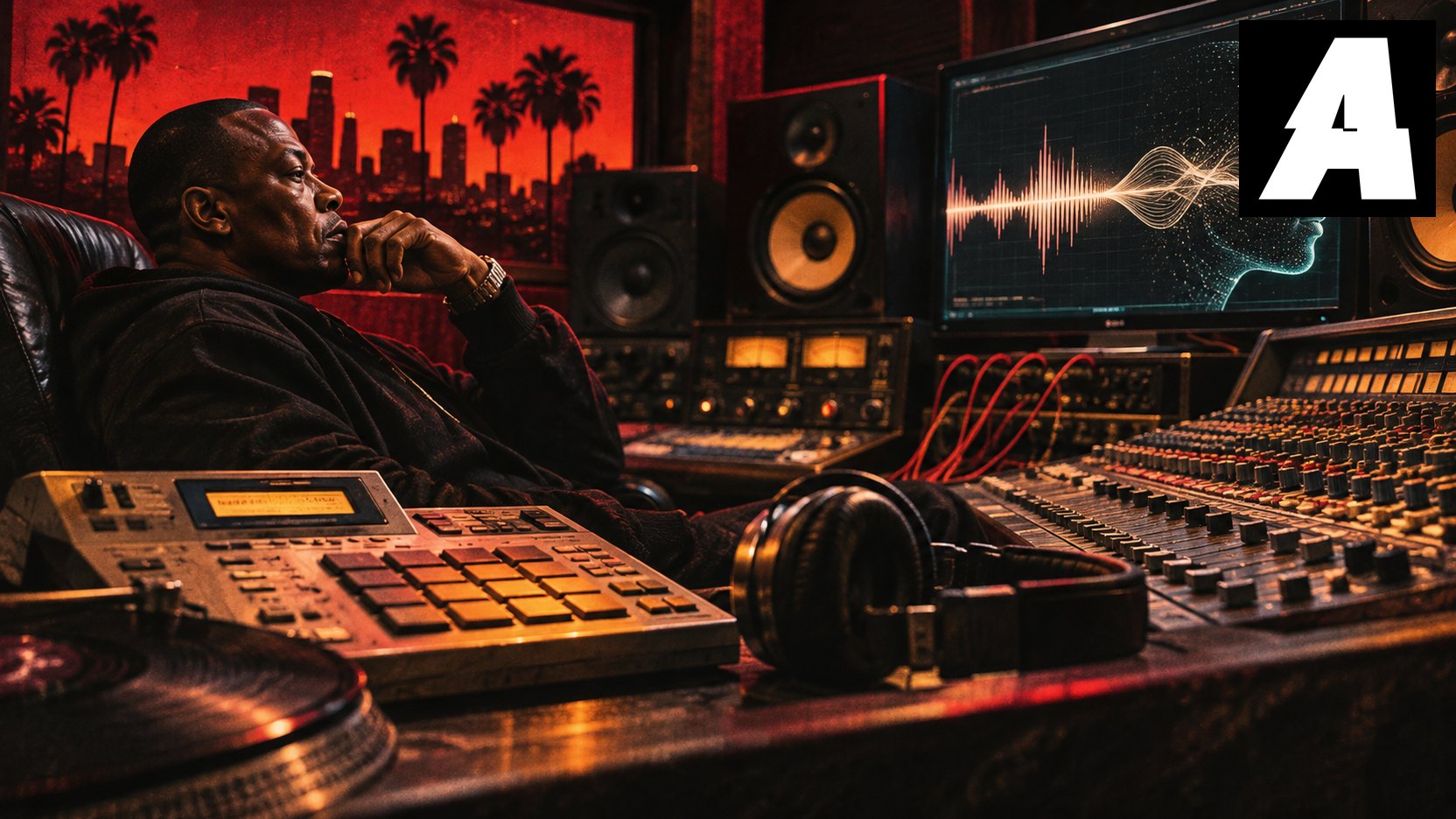
Dr. Dre isn’t afraid of a prompt asking for his mix signature—because he knows the difference between copying a frequency curve and building a room.
By Jay Robinson | Sat, Nov 7, 2026
Listen to the snare snap on 2001 or the way the sub-bass sits underneath “Still D.R.E.” without crowding the vocal pocket, and you are hearing ten thousand hours of obsessive physical labor—a producer making live studio musicians play the exact same two-bar groove forty times in a row until the transient weight felt like a heavy door latching shut. That low-end architecture is the sound people are trying to summon when they type “Mix my record like Dr. Dre” into a generative audio prompt.
When Ice Cube asked Dr. Dre on the debut episode of the Listen & Laugh podcast with Mike Epps whether that prompt would bother him, Dre didn’t flinch. “No, because as a creative force and an innovator, I could not be mad at that,” Dre said. “I would respect that… I would love that because that is a part of creativity and innovation”. That wasn’t an off-the-cuff soundbite; it was a continuation of the stance Dre laid out alongside Jimmy Iovine in The New York Times back in August, where he compared anti-AI purists to the gatekeepers who once dismissed drum machines and synthesizers, adding that he already uses AI in his own sessions “as a tool to see what it would do with what I just did”.
The internet predictably split into two predictable camps—one treating Dre’s co-sign like a blank check for prompt-to-song shortcuts, the other accusing a billionaire icon of pulling the ladder up behind human musicians. Both reactions miss what Dre is actually saying as a working producer.
Notice the exact phrasing Dre used in The New York Times: he feeds the machine what he just did to see where it bends the signal. That is the polar opposite of asking a text box to invent a career from scratch. In the late eighties and nineties, Dre and Cube took Parliament-Funkadelic breaks, Leon Haywood loops, and analog Moog leads, ran them through E-mu SP-1200s and Akai MPCs, and rebuilt them into West Coast sonic architecture. As Greg Tate argued throughout his career, hip-hop has always been a radical, sci-fi act of sonic archaeology—taking existing electrical signals and re-engineering their weight and meaning. Dre views AI through that exact same sampler logic: another rack unit in the studio that takes raw material and reveals an unexpected harmonic angle.
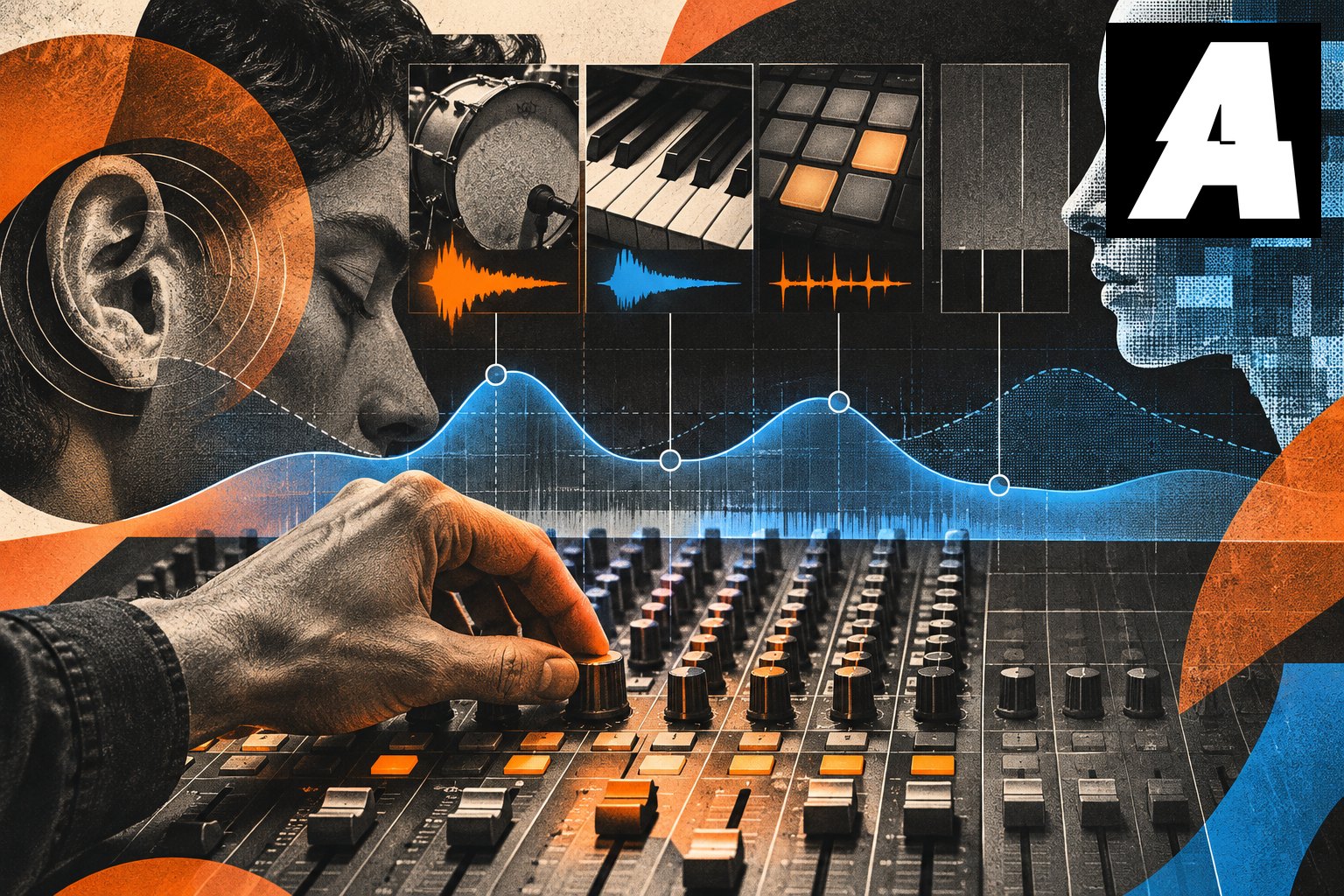
Where Ice Cube pushed back on the podcast, however, is where every serious producer has to draw the line. Cube wasn’t arguing against new gear; he was asking what happens when the friction of taste and human judgment gets optimized out of the room entirely—when a model can mimic the surface of a Dre mix without anyone understanding why a kick drum needs room to breathe. An algorithm trained on Dre’s catalog can approximate his compression ratios and bright top-end sheen in seconds, just like a preset pack can mimic RZA’s dusty SP-1200 grit or Geoff Barrow’s tape saturation. What it cannot replicate is the ear that knows when to mute sixteen tracks and leave nothing playing but a dry kick and a single piano note.
Dre isn’t threatened by someone typing his name into a prompt because a tool only exposes the hand holding it. If you don’t know how to build tension in a room, an AI “Dre mix” will just give you expensive-sounding emptiness; if you actually know how to produce, it becomes one more mirror to test your own ideas against. The machine can copy the signature, never the ear that earned it.
AdSense/Ad Spot Placeholder